

Don't Do That
Reviving social norms and personal restraint to heal America

In this column
* Right vs. Wrong
* Moral shyness
* Social norms as the blessings of liberty
* The high cost of permissiveness
* Moral leadership
We removed the guard rails and now wonder why we’re veering off the road.
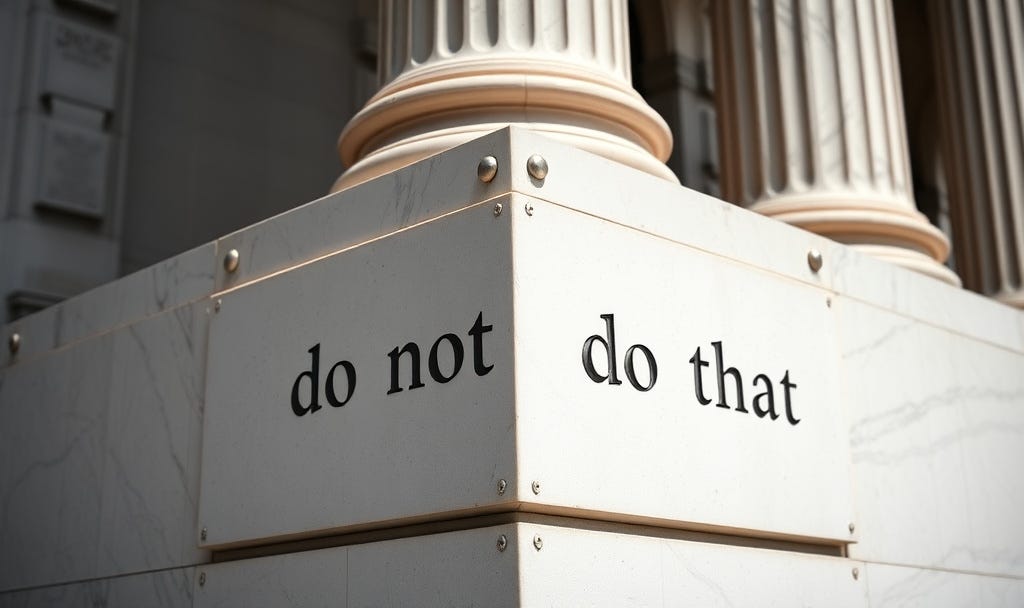
Act Right
When I was a kid, I must’ve heard, “Don’t do that” a million times. From my parents. From teachers. From random adults.
It was the response to instigating my brother, roughhousing at the wrong times, and pestering a classmate. Misbehaving in a 7-Eleven. Throwing a football across a street as cars were passing by. Using inappropriate language at the mall.
But everyone my age—boys, girls, adolescents, teens—was on the receiving end of such orders. We all got “adjusted.” And frequently.
Adults weren’t worried about our self esteem when we misbehaved. They didn’t engage in a 10-minute formative conversation when a kid littered or pushed or taunted. The term “gentle parenting” didn’t exist.
When we weren’t acting right, a grown-up told us to act right. It really was that simple.
In fact, we seldom fought back when hit with a “Don’t do that.” We might’ve muttered under our breath. But we understood there was a difference between right and wrong. And we understood that adults were going to police it.

As kids, we understood that there was a difference between right and wrong. And we understood that adults were going to police it.
Collective Inability
You might think this is an essay about President Trump’s recent celebration of Robert Mueller’s death.
Or an essay about the president’s mendacity or the general coarsening of public discourse nationally.
Or maybe you think it’s about the rapid growth in gambling—as discussed in this Atlantic article—and how that is ruining lives.
But no. It’s actually about all of those things and many and many and many more.
It’s about our collective inability to say, “Don’t do that” and the awful consequences.
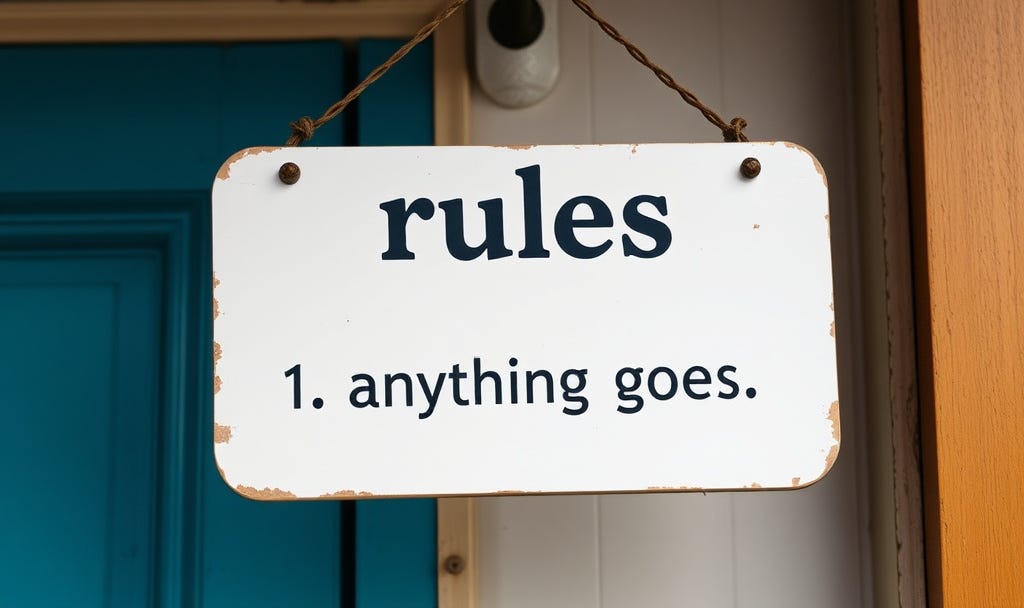
You can easily see “Don’t do that” in the rules of civility and courtesy, in the lessons of fables and parables, in the rules of faith traditions and civil law.
Restraints as Blessings of Liberty
The Preamble of the U.S. Constitution lists the purposes of the government. Among those is securing the “blessings of liberty.” Interestingly, it’s not liberty itself. Not the right of people to do whatever, whenever. But the blessings of liberty.
Of course freedom is valuable. We should have protection from a domineering state. But as important as individual liberty is what a society learns when its citizens live in liberty over time.
Society learns that free people can do all sorts of things that are bad for individuals and bad for the community. And people do those bad things repeatedly, as though it’s part of humans’ factory settings. We can lie and cheat. Act cruelly. Take advantage of others. Abuse power. Thwart cooperation. Cause suffering through neglect or dereliction of duty.
So society creates an array of practices, traditions, and policies for dealing with the downsides of freedom: Civility, courtesy, mores, conventions, rectitude, restraint, reputation, references, fables, parables, religious strictures, credit scores, shame, stigma, ethics, virtue, ostracism, shunning, respect, torts, crimes…
These are among the blessings of liberty. They flow from the lessons learned from freedom. They enable a free people to thrive despite the bugs in our programming.
You can easily see “Don’t do that” in the rules of civility and courtesy, in the lessons of fables and parables, in the rules of faith traditions and civil law. You can see the consequences of ignoring “Don’t do that” in stigma, shame, shunning, civil liability, and criminal sentences.
Permissive to a Fault
A healthy society doesn’t tolerate a public official’s celebration of a citizen’s death or gratuitous lying or insulting by those in charge. A healthy society knows from long experience that individuals and then society suffer when gambling expands, especially at a lightning-fast clip.
But we also should’ve said, “Don’t do that” as states started swiftly legalizing drugs. We should’ve known the problems this would cause, especially for the young, like increased rates of later mental illness.
We should’ve said “Don’t do that” to the rapid growth of online pornography, including OnlyFans. We should’ve known what this would do to young men and women. But we didn’t act, and now we’re dealing with the consequences.
We should’ve known what giving phones and other screens to young people would do to mental health and student learning. And yet we’re about to do the same with AI.
We should’ve known the chaos that would ensue from the “defund the police” movement and cities’ decision to not prosecute crimes. And the problems that would arise from fostering political homogeneity among faculty and inhibiting free speech on campuses. And the problems caused by playing footsie with antisemites.
We all should’ve said in unison “Don’t do that” when people completely ignorant about governing were put in charge of DOGE, a massive attempt to overhaul governing. We should’ve shouted, “Don’t do that” when unqualified individuals were selected to head Defense, HHS, the FBI
We can’t even find the backbone to say, “Don’t do that” as politicians now swear routinely in public settings.
We removed the guard rails and now wonder why we’re veering off the road.
Common-Good Leadership
This problem, though serious, is solvable. The key is moral leadership. Someone needs to take a stand against 1) transgressors who valorize rule-breaking; and 2) libertines who reject constraints. We need someone instead who appreciates that “Don’t do that” isn’t just finger-wagging; it’s often the path to flourishing.
America has gone through spells of moral-social rejuvenation before, sometimes big, sometimes small. The temperance movement, the second Great Awakening, the war on drugs, the war on crime, movements against violence in music and film. At some point Americans get fed up with bad behavior that hurts us all.
The kind of leadership needed, however, is unusual. It requires a person of serious moral (perhaps spiritual) depth. One must have a very sturdy foundation to confidently say, “We as a people don’t do that.” It takes a wise, grounded leader to talk about the link between self-command and the good life.
This type of leader needs to have rock-solid, deep convictions about family, community, discipline, honesty, integrity, duty, and excellence. This type of leader needs to model virtuous behavior and talk about it regularly.
For all his leadership flaws, Jimmy Carter’s moralism was welcome in the wake of the transgressive 1960s, Watergate, and Vietnam. Lincoln’s invaluable moralism appeared during America’s most divisive period.
It would be hard for the nation’s capital to produce this kind of figure at the moment. Washington has been a big contributor to these dissolute times. Who inside the Beltway has distinguished himself/herself as an effective leader of character in the last 10-15 years?
If such a leader is to emerge—and I sure hope one does—I’m looking to current and recent governors.
Regarding the question, "Who inside the Beltway has distinguished himself/herself as an effective leader of character in the last 10-15 years?," I nominate one: Ben Sasse.
I am sympathetic with a lot of these arguments, including the *right* to pass moralizing laws for public benefit under the police power. However, in cases like drug legalization (at least re: marijuana) I would also suggest that legal prohibitions are not worth the costs of criminalization and that they seem to ignore the more important middle ground of cultural norms and stigmatization. That is, many Americans now seem to (falsely) assume that if something is legal it is not subject to shame or judgment. I am more concerned about the culture of permissiveness than its legal grounds. Sort of the position outlined here:
https://www.commonwealmagazine.org/there-ought-be-law