

A Unitary Legislative Theory?
Could executive-branch regulations be unconstitutional?

NOTE 1: I’ve recently done a bunch of writing outside of Governing Right, so rather than penning something fresh today, I want to highlight something I had published last week and encourage you to give it a read. See below!
NOTE 2: In the next week or so I’ll have two more pieces coming out elsewhere. Over at The Dispatch, I’ll have an essay in their new Culture section. I wrote about the best album in America’s foundational music genre—the recording of a live concert you’ve probably never heard of. Then, over at Law & Liberty, I’ll have a review of Justice Amy Coney Barrett’s new book.
NOTE 3: All of the above is in addition to weekly releases of my serial novel, COMMUNITY DAY! Each Thursday evening, a new section of the book is made available to paid subscribers. Six of 13 sections have been released; the seventh drops in two days. Please subscribe to support my fiction and to get access to a story for the times.

Rule-Making, Agencies, and Congresss
Last week, I had an essay run over at SCOTUSBlog, the best site for news and commentary about the US Supreme Court.
My piece is called, “Did Justice Kagan Debilitate the Administrative State?”
I wrote it because I did a double-take while listening to the oral argument in Trump v. Slaughter. Justice Kagan asked a series of questions based on an argument I did not see coming. Kagan’s claim is that executive branch rule-making (a.k.a. “regulating”) is fundamentally legislative.
Let me put it this way: Big if true.
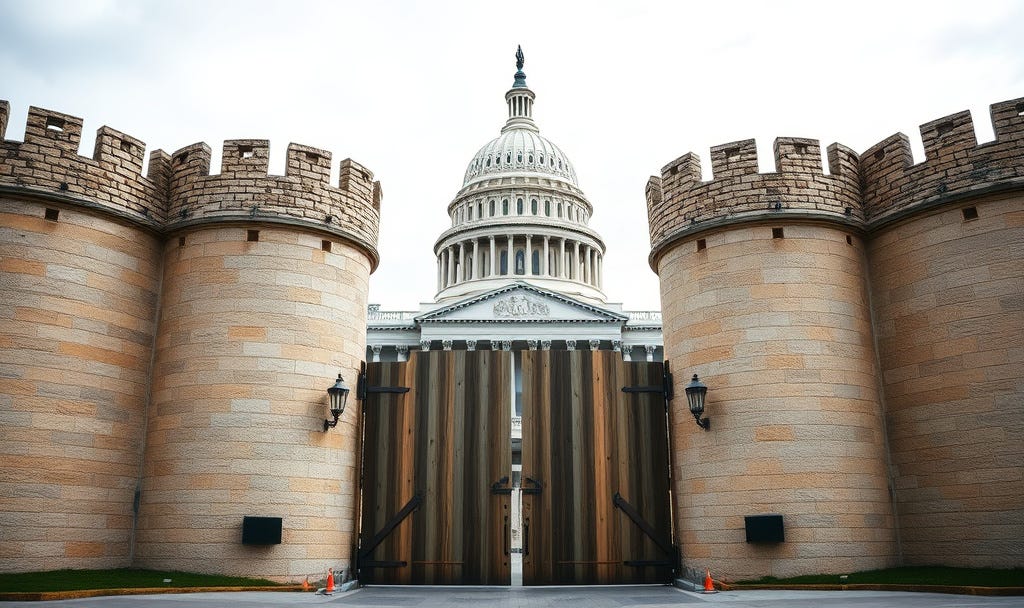
Guarding the Legislative Branch
I don’t want to rehash the whole essay for you—give it a read!—so I’ll just give you the architecture.
Rule-making is the process used by agencies to flesh-out statutes so the agency is able to implement statutes.
Rule-making has been understood as a quintessential executive activity. That is, in order for agencies to executive laws, agencies need the ability to use rules to define terms, provide detail, describe processes, etc.
Rules often veer into policy-making because the process of fleshing-out a statute for the purposes of implementation inevitably includes making some policy decisions.
Policy-making is what Congress does. So policy-making is legislative. If rule-making is policy-making, it is legislative in nature. Therefore, perhaps it must belong to Congress not executive-branch agencies.
The “unitary executive theory” holds that the president must control all executive functions. So perhaps we need a “unitary legislative theory” holding that Congress must control all legislative functions.
That would likely entail clearer judicially enforced rules identifying when a regulation is sufficiently executive (i.e., it can be done by agencies) and when it becomes legislative (i.e., it must not be done by executive-branch entities).
“Article I, Section 1: All legislative Powers herein granted…”
Obviously, there’s more to the piece, including the ways Congress and the courts already limit rule-making. But I’m intrigued by the idea at the heart of Kagan’s point: Let’s get serious about the legislative nature of modern regulations.
I seldom agree with Justice Kagan on the most contentious issues, but my executive-branch experience supports—at least somewhat—her contention here.
As I write in the last paragraph:
The court’s seeming embrace of a unitary executive theory demands presidential supervision of the entire executive branch, but a healthy separation of powers requires limits on the amount of power the president supervises. Perhaps the clearest way to do that is through a unitary legislative theory that keeps all legislative power, including all policymaking regulation, out of the president’s hands.